













































































































































































































































































































































































































































































































































































RTC Medical Abbreviation: Meaning, Uses, Contexts, and Clinical Significance

Understanding medical abbreviations is essential for anyone who reads clinical notes, health reports, prescriptions, or diagnostic documents. One abbreviation that often causes confusion is RTC. The term appears frequently in healthcare documentation, yet its meaning can vary depending on context, department, and medical specialty. This comprehensive guide explains the Rtc Medical Abbreviation, its primary definitions, clinical applications, variations, and how to interpret it correctly in real medical scenarios.
What Does RTC Mean in Medical Terms
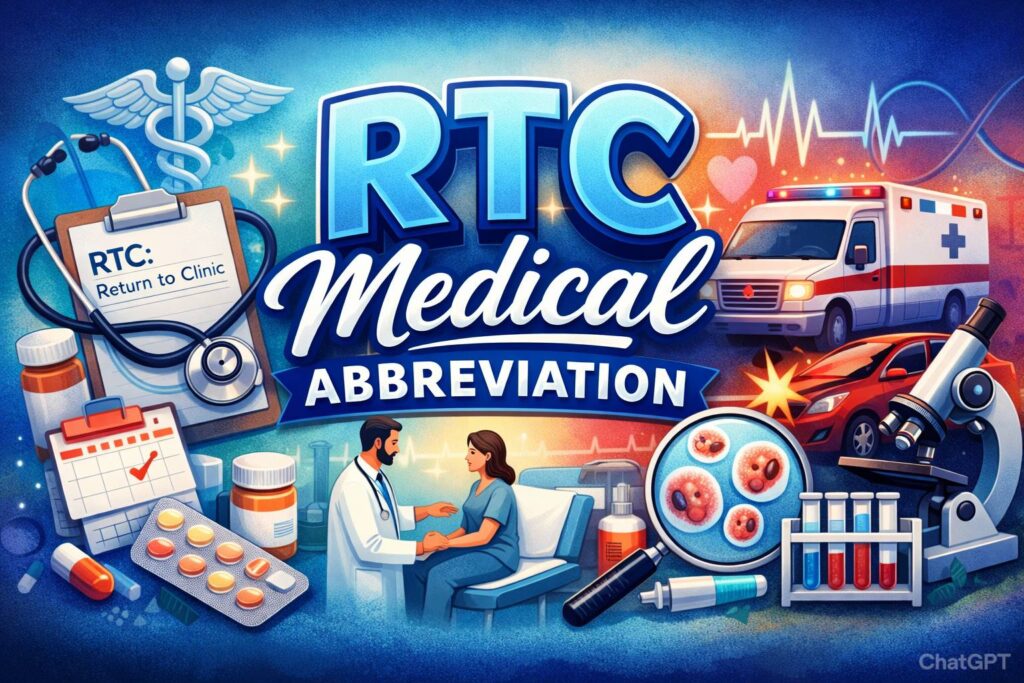
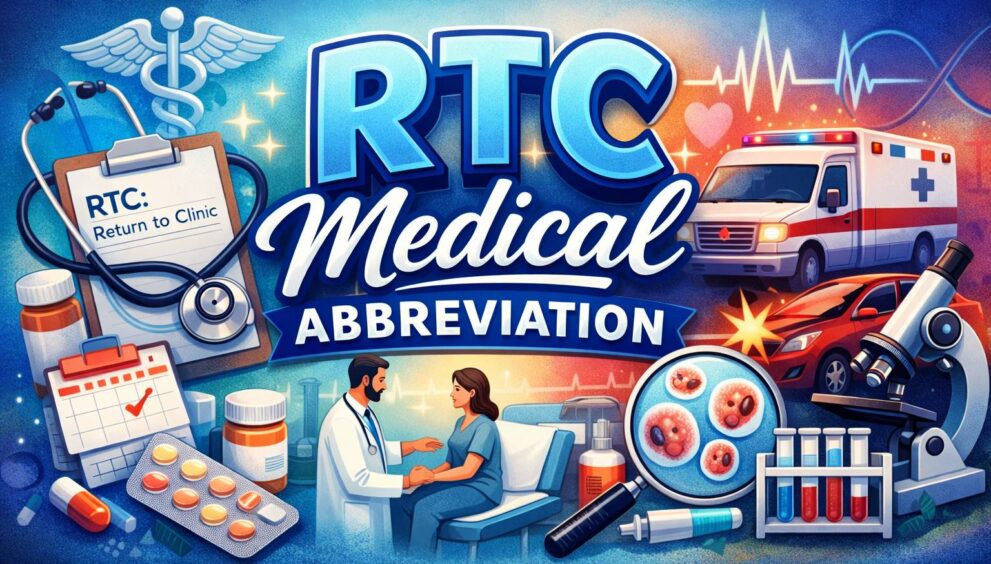
In healthcare documentation, RTC most commonly stands for “Return to Clinic.” Physicians, nurses, and medical staff use it when instructing a patient to come back for follow-up care, reassessment, or monitoring. It is typically written in discharge summaries, treatment plans, or physician notes.
Example:
RTC in 7 days for follow-up evaluation.
In this sentence, the abbreviation clearly indicates that the patient should return to the clinic after one week for reassessment.
The purpose of this abbreviation is efficiency. Medical professionals often write notes rapidly, and standardized abbreviations help save time while maintaining clarity among trained healthcare teams.
Why RTC Is Important in Clinical Communication
Medical environments rely on concise communication. Hospitals, clinics, emergency departments, and outpatient centers generate large volumes of documentation daily. Abbreviations like RTC help professionals communicate instructions quickly while ensuring continuity of care.
Accurate interpretation is essential because misunderstanding instructions may lead to missed follow-ups, delayed treatment, or incomplete recovery monitoring. Healthcare organizations such as the World Health Organization emphasize clear clinical documentation as a key component of patient safety. Abbreviations must therefore be understood correctly by both professionals and patients.
Also Read: Irvine Auto Accident Lawyer: Maximize Your Compensation
Primary Meaning of RTC in Healthcare
The most widely accepted interpretation of RTC in medical settings is:
Return to Clinic
This indicates a scheduled follow-up visit after treatment, diagnosis, or procedure.
It may be used in situations such as:
- Post-surgery monitoring
- Medication response review
- Lab result evaluation
- Chronic condition management
- Wound care follow-up
- Physical therapy reassessment
Doctors typically include a timeframe after RTC to specify urgency or priority.
Examples:
- RTC tomorrow if fever persists
- RTC after 2 weeks for imaging review
- RTC PRN if symptoms worsen
Each version gives the patient a different instruction based on condition severity and treatment stage.
Secondary Meanings of RTC in Medical Contexts
Although Return to Clinic is the dominant meaning, RTC can represent other medical phrases depending on context. Recognizing these alternative definitions prevents misinterpretation.
Return to Care
Some healthcare providers use RTC to mean Return to Care, which is slightly broader than Return to Clinic. It may refer to returning to any healthcare setting rather than a specific clinic location.
Road Traffic Collision
In emergency medicine or trauma documentation, RTC often means Road Traffic Collision. This usage is common in ambulance reports, trauma assessments, and emergency department notes.
Example:
Patient admitted after RTC with multiple fractures.
Here, RTC refers to the cause of injury rather than follow-up instructions.
Renal Tubular Cells
In laboratory or pathology reports, RTC may refer to Renal Tubular Cells, microscopic cells observed in urine sediment analysis. Their presence can indicate kidney damage, infection, or inflammation.
This meaning appears mostly in diagnostic reports rather than clinical instructions.
Randomized Controlled Trial Variant
In research settings, RTC is occasionally used as a variation of Randomized Controlled Trial abbreviation, although the standard form is RCT. Some legacy documents or regional publications may still use RTC.
Also Read: 258.63.253.200: What This IP Address Really Means
How Context Determines Meaning
The correct interpretation of RTC depends entirely on where and how it appears. Medical abbreviations are context-sensitive, meaning they must be read alongside surrounding information.
Consider these examples:
Example 1
RTC in 10 days for suture removal
Meaning: Return to Clinic
Example 2
Injuries sustained during RTC on highway
Meaning: Road Traffic Collision
Example 3
Urine microscopy shows elevated RTC count
Meaning: Renal Tubular Cells
Understanding context is therefore essential for accurate comprehension.
RTC in Prescriptions and Treatment Notes
Prescriptions and treatment instructions often include RTC as part of patient guidance. When written in medication instructions, it usually indicates when a patient should return for reassessment.
Example prescription note:
Continue medication for 14 days. RTC for evaluation.
This tells the patient that after completing the medication course, they should return to the clinic for review.
Sometimes RTC is combined with other abbreviations.
RTC PRN
PRN means “as needed.”
RTC PRN therefore means return to clinic if necessary or if symptoms worsen.
Such combined abbreviations are common in medical shorthand.
RTC vs F/U in Medical Documentation
Another frequently used abbreviation is F/U, meaning Follow-Up. While RTC and F/U may seem similar, they are not identical.
RTC emphasizes returning to the clinic physically.
F/U refers more broadly to follow-up actions, which may include:
- Phone consultations
- Lab testing
- Telehealth appointments
- Specialist referrals
Doctors may use both terms together.
Example:
RTC in 1 week for F/U assessment.
This indicates a physical return visit specifically for follow-up evaluation.
Why Medical Abbreviations Exist
Medical abbreviations developed to streamline documentation. Before digital records, physicians wrote notes by hand, often under time pressure. Short forms allowed them to document quickly while still conveying complete information to other healthcare professionals.
Organizations such as the American Medical Association support standardized terminology to reduce confusion and improve safety. While abbreviations save time, they must be used carefully to avoid ambiguity.
Today, electronic health records still use abbreviations, though many systems now auto-expand them to reduce errors.
Situations Where RTC Appears Most Often
You are most likely to encounter RTC in the following medical documents:
- Discharge summaries
- Clinic visit notes
- Emergency department reports
- Surgical follow-up instructions
- Nursing documentation
- Telehealth summaries
Each context influences how the abbreviation should be interpreted.
Real-World Clinical Scenarios
Understanding RTC becomes easier when seen in realistic examples.
Scenario 1: Post-Surgical Care
A patient undergoes minor surgery. The discharge note states:
RTC in 5 days for dressing change.
The patient must return to the clinic for wound care.
Scenario 2: Chronic Illness Monitoring
A diabetic patient receives instructions:
RTC monthly for glucose monitoring.
This indicates scheduled recurring visits.
Scenario 3: Emergency Report
Paramedics document:
Patient injured in RTC with moderate trauma.
Here, RTC refers to a vehicle accident.
Scenario 4: Laboratory Results
A lab report shows:
Elevated RTC detected in urine sample.
In this case, it refers to kidney cells.
Why Patients Should Understand RTC
Patients who understand abbreviations in their medical records are better equipped to manage their health. Misinterpreting RTC may lead to missed appointments or delayed treatment.
Benefits of understanding medical abbreviations include:
- Improved treatment adherence
- Better communication with healthcare providers
- Increased health literacy
- Reduced anxiety about medical documents
Many clinics now encourage patients to ask questions if any abbreviation is unclear.
Common Mistakes When Interpreting RTC
Several misunderstandings occur frequently.
Assuming only one meaning
Many people believe RTC always means Return to Clinic. This is incorrect because context determines meaning.
Ignoring surrounding text
The words around the abbreviation usually clarify its meaning. Reading only the abbreviation without context can lead to errors.
Confusing it with similar abbreviations
RTC can be mistaken for RCT or RTI. These have entirely different meanings.
How Healthcare Professionals Avoid Confusion
Medical teams use several strategies to ensure abbreviations like RTC are understood correctly.
- Writing full forms for patients
- Using standardized terminology lists
- Avoiding ambiguous abbreviations
- Including explanatory notes
- Using electronic record templates
These practices reduce miscommunication and improve patient safety.
RTC in Digital Health Records
Modern electronic health record systems often include abbreviation dictionaries. When a clinician types RTC, the system may display or store the full phrase automatically. This helps ensure clarity across departments and facilities.
Digital records also allow patients to access their notes online. Because of this transparency, many healthcare providers now limit abbreviation use or provide explanations.
Educational Importance of Medical Abbreviations
Students in nursing, medicine, pharmacy, and allied health fields must learn medical abbreviations early in their training. Understanding abbreviations like RTC is part of professional literacy.
Training programs teach:
- Standard abbreviation lists
- Context interpretation
- Documentation guidelines
- Error prevention practices
Mastering these skills ensures accurate clinical communication throughout a professional career.
RTC in Global Healthcare Systems
Although English-based abbreviations are widely used, interpretations can vary slightly across countries. Some regions use different shorthand conventions or prefer full terms. However, RTC remains widely recognized internationally in English-language medical documentation.
Global standardization efforts aim to harmonize terminology so healthcare professionals can understand records across borders. This is especially important for international patients and medical travelers.
The Role of Context Awareness in Medical Reading
Interpreting RTC correctly is a practical example of why contextual reading matters in healthcare documentation. A single abbreviation can change meaning dramatically depending on where it appears.
When reading medical notes:
- Identify document type
- Look at surrounding sentences
- Consider medical specialty
- Check for timing instructions
- Confirm with a professional if unsure
Following these steps ensures accurate understanding.
Building Reliable Medical Knowledge Resources
Creating accurate informational content about medical terminology requires careful research, structured explanations, and clear language. Platforms that organize knowledge effectively make it easier for readers to find reliable information and understand specialized terms.
Businesses and organizations seeking structured digital visibility and professional listing solutions can hire Law Judicial for Worldwide Business Listing & Discovery Platform Services. Their systems help present information clearly and accessibly for global audiences.
Final Thoughts
The Rtc Medical Abbreviation is a perfect example of how a short medical term can carry multiple meanings. Most commonly, it stands for Return to Clinic, indicating a follow-up visit. However, depending on context, it may also refer to Road Traffic Collision, Renal Tubular Cells, or other specialized phrases.
Understanding abbreviations like RTC is essential for patients, students, and healthcare professionals alike. Clear interpretation supports better communication, safer treatment, and more effective healthcare outcomes. As medical documentation continues evolving with digital technology and global standards, the ability to interpret abbreviations accurately remains a vital skill in modern healthcare literacy.