




































































































































































































































































































































































































































































































































Cavemen Write Down the First Laws and Their Punishments

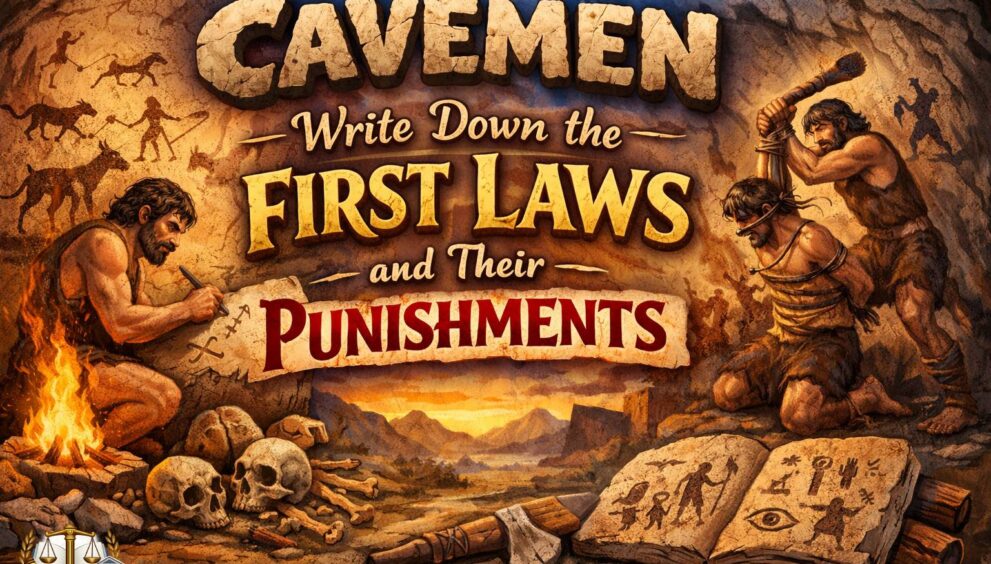
Cavemen Write Down the First Laws and Their Punishments
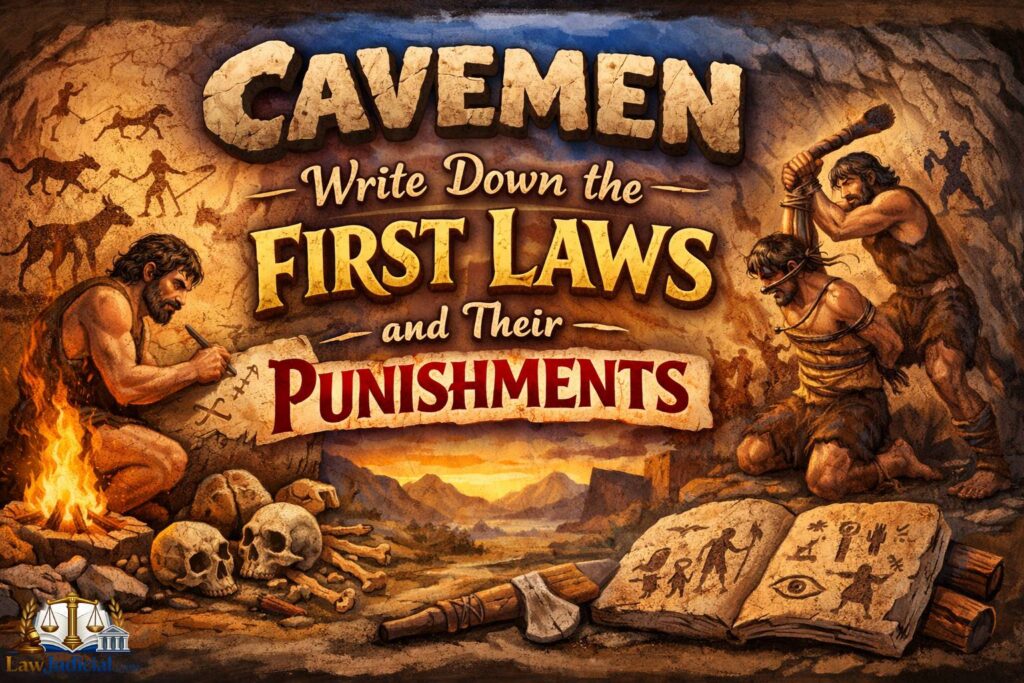
The idea that cavemen write down the first laws and their punishments may seem surprising at first, but it represents a crucial turning point in human history. Long before organized governments and formal courts, early human societies needed rules to maintain order, protect resources, and ensure survival. These early laws were not complex documents but practical guidelines rooted in daily life, conflict resolution, and shared values.
As communities grew larger, relying solely on memory and tradition became unreliable. Writing laws down helped preserve social norms and ensured that everyone understood the consequences of harmful behavior. Punishments, often severe, reflected the fragile nature of prehistoric life where one individual’s actions could endanger the entire group.
Understanding how cavemen recorded laws and enforced punishments provides insight into the foundations of justice, authority, and social responsibility. These early systems shaped the evolution of legal structures that continue to influence modern societies today.
Life Before Laws: Survival Through Instinct and Custom
Before formal laws existed, early humans relied on instinct, social bonds, and unwritten customs. Small groups operated through shared expectations rather than written rules. Cooperation was essential for hunting, gathering, child-rearing, and defense against predators or rival groups.
However, as populations increased and resources became more limited, conflicts emerged. Disputes over food, territory, mates, and leadership became more frequent. Without agreed-upon rules, these conflicts could spiral into violence that threatened the entire group.
Customs slowly formed to regulate behavior. These customs were remembered, repeated, and enforced by elders or dominant members of the group. Over time, they evolved into recognizable rules that governed daily life.
Why Early Humans Needed Laws
The need for laws arose from three major pressures: survival, fairness, and authority.
Survival depended on cooperation. A single violent individual could destabilize the group. Laws helped control behavior that endangered everyone.
Fairness mattered because resentment could fracture social bonds. Clear rules reduced personal vendettas by offering predictable consequences for wrongdoing.
Authority became necessary as groups grew larger. Leadership structures required legitimacy, and laws provided a way to formalize power and decision-making.
Writing laws down transformed them from flexible customs into shared social contracts. Once rules were recorded, they became harder to ignore or manipulate.
Also Read: How to Connect Arlo Pro 2 to Fiber Optic Internet
The Transition from Oral Tradition to Written Law
For thousands of years, early rules were passed down orally. Elders memorized stories, taboos, and moral lessons that guided behavior. These oral laws were powerful but fragile, as memory could change or fade.
The development of symbolic thinking and early writing systems allowed humans to preserve rules permanently. Cave markings, carved stones, and early tablets became tools for recording laws and punishments.
Writing laws served several purposes:
-
It ensured consistency in enforcement
-
It educated future generations
-
It reinforced authority by making rules visible and public
Once laws were written, they became less personal and more institutional, shifting justice from revenge to regulation.
What Did the First Laws Look Like?
Early laws were simple, direct, and practical. They focused on actions that threatened survival or social order rather than abstract morality.
Common subjects of early laws included:
-
Theft of food or tools
-
Violence within the group
-
Disobedience to leaders or elders
-
Sexual behavior and family roles
-
Resource sharing and hunting rights
These laws were not universal or equal. Status mattered greatly. Leaders, warriors, or shamans often received lighter punishments, while outsiders or weaker members faced harsher consequences.
Punishment as a Tool for Social Control
Punishment in early societies served less to rehabilitate and more to deter. The goal was to prevent harmful behavior quickly and decisively.
Punishments were public, symbolic, and often severe. They reinforced group norms and demonstrated the cost of disobedience.
Common punishments included:
-
Physical pain, such as beating or branding
-
Exile from the group
-
Loss of food privileges
-
Forced labor
-
Death in extreme cases
The severity of punishment reflected the fragility of early communities. One act of betrayal could mean starvation or extinction for everyone.
Exile: The Ultimate Caveman Punishment
Exile was one of the most feared punishments in prehistoric times. Being cast out of the group often meant certain death due to exposure, predators, or starvation.
This punishment was reserved for serious offenses such as:
-
Repeated theft
-
Murder
-
Betraying the group to enemies
-
Violating sacred taboos
Exile allowed the group to remove dangerous individuals without internal bloodshed. It also reinforced the idea that survival depended on belonging.
Violence and Retribution in Early Law
Violence was both regulated and sanctioned under early legal systems. While random violence was punished, controlled violence was sometimes required.
For example:
-
Revenge killings could be allowed under specific conditions
-
Family members might be responsible for avenging wrongs
-
Compensation through goods or labor could replace bloodshed
This system balanced deterrence with practicality. Total nonviolence was unrealistic in harsh prehistoric environments.
Sacred Laws and Spiritual Punishments
Many early laws were closely tied to spiritual beliefs. Natural disasters, illness, or failed hunts were often interpreted as punishment from supernatural forces for breaking sacred rules.
Shamans and spiritual leaders played a legal role by:
-
Interpreting signs and omens
-
Declaring certain actions taboo
-
Prescribing rituals as punishment or cleansing
Punishments could include:
-
Isolation for spiritual purification
-
Forced offerings
-
Public confession
-
Ritual scars or markings
These laws reinforced obedience by linking behavior to cosmic consequences beyond human control.
Gender Roles and Early Legal Codes
Early laws often reinforced strict gender roles. These roles were shaped by biological realities and survival strategies.
Men were typically governed by laws related to hunting, warfare, and leadership. Women were often regulated through laws concerning reproduction, family structure, and labor.
Punishments for violating gender norms could be severe, particularly for women, as lineage and inheritance were critical to group stability.
These early inequalities became embedded in later legal systems, influencing laws for thousands of years.
Property and Ownership in Prehistoric Law
As humans transitioned from nomadic to semi-settled lifestyles, ideas of property emerged. Tools, shelters, hunting grounds, and food stores needed protection.
Early laws defined:
-
Who owned what
-
How resources were shared
-
What happened when ownership was violated
Theft was considered a serious crime because it directly threatened survival. Punishments were often swift and public to discourage future violations.
Law as Memory and Identity
Writing down laws did more than control behavior. It helped communities remember who they were.
Recorded laws preserved:
-
Group values
-
Collective experiences
-
Lessons learned from conflict
They became a form of identity, separating one group from another. Law was no longer just about survival but about culture.
The Legacy of Caveman Laws
Though primitive, these early laws laid the groundwork for modern legal systems. Concepts such as punishment proportionality, authority, evidence, and collective responsibility all trace back to prehistoric practices.
Over time, laws became more complex, written language improved, and justice systems evolved. Yet the core purpose remained the same: managing human behavior in a shared space.
Modern laws still reflect ancient priorities:
-
Protecting life
-
Preventing chaos
-
Ensuring cooperation
-
Establishing authority
From Cave Walls to Courtrooms
The act of writing laws was revolutionary. It shifted power from individuals to systems, from memory to record, and from instinct to structure.
Cavemen who etched rules into stone could not have imagined courts, lawyers, or constitutions. Yet their efforts created the foundation for all of them.
Law began not as an abstract ideal but as a survival tool. In harsh environments where every decision mattered, rules and punishments were essential.
Conclusion: Why the First Laws Still Matter
The earliest written laws and punishments represent humanity’s first attempt to balance freedom with order. They show that even in the most primitive conditions, humans sought fairness, stability, and meaning.
Understanding these origins helps us see modern law not as a cold system, but as a deeply human invention shaped by fear, hope, cooperation, and survival.
From cave walls to legal codes, the story of law is ultimately the story of how humans learned to live together.
Frequently Asked Questions (FAQs)
1. Why did Cavemen Write Down the First Laws and Their Punishments?
Cavemen wrote down laws and punishments to maintain order, prevent violence, and protect group survival. Written rules reduced disputes by making expectations clear and punishments predictable. This helped communities avoid chaos and ensured that everyone followed the same standards.
2. What kinds of laws existed in prehistoric societies?
Prehistoric laws focused on survival-related issues such as theft of food, violence within the group, disobedience to leaders, and misuse of shared resources. These laws were practical rather than moral, aiming to keep the group functioning smoothly.
3. How were punishments decided in early human communities?
Punishments were usually decided by elders, leaders, or spiritual figures. The severity depended on the offense and the threat it posed to the group. Public punishment was common to discourage others from repeating the same behavior.
4. Were early punishments always violent?
Not all punishments were violent. While physical penalties existed, other consequences included exile, loss of privileges, forced labor, or spiritual rituals. Exile was often considered worse than physical punishment because it meant isolation and likely death.
5. How did early laws influence modern legal systems?
Early laws introduced key concepts such as authority, accountability, and social order. Over time, these ideas evolved into structured legal systems with written codes, courts, and proportional punishments, forming the foundation of modern law.