











































































































































































































































































































































































































No Touch Law California: What Every Driver Must Know

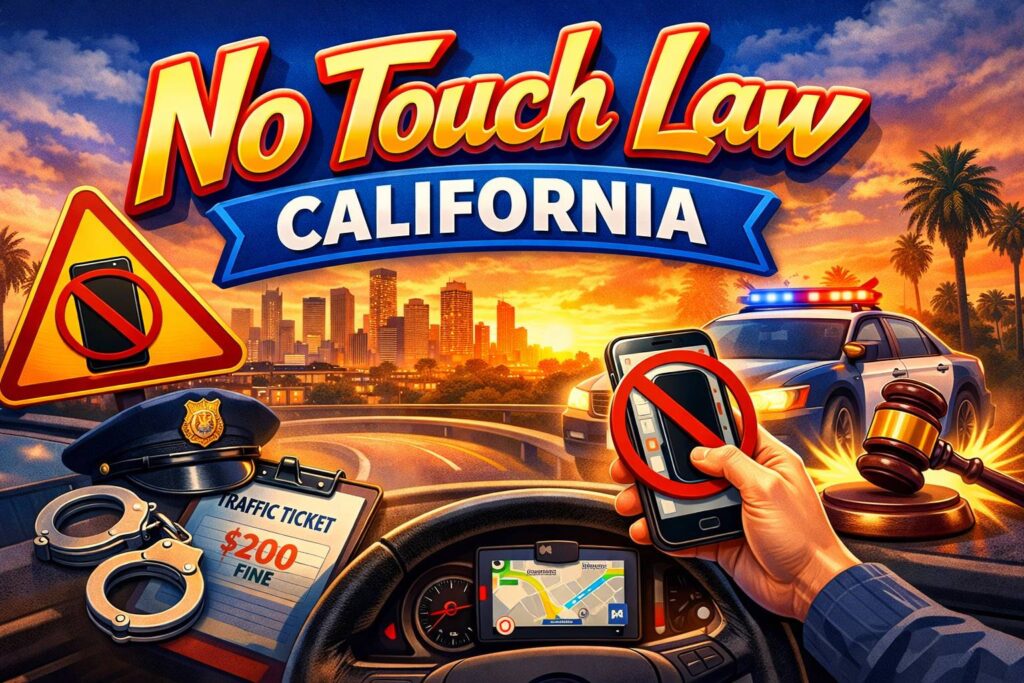
The No Touch Law California is one of the strictest distracted-driving regulations in the United States. Designed to reduce accidents caused by mobile phone use, this law prohibits drivers from holding or manually operating a phone while driving except under very limited conditions. The rule is rooted in California Vehicle Code §23123.5, which mandates that drivers may only use phones if they are configured for hands-free operation and used that way while driving.
In recent years, legal interpretations and court rulings have strengthened enforcement of this statute, creating what many now call a “no-touch” standard: if you’re holding your phone while driving, you may already be breaking the law even if you’re not texting or calling.
What Is the No Touch Law California?
The No Touch Law California refers to the legal interpretation of Vehicle Code §23123.5 that prohibits drivers from holding or manually using handheld electronic devices while operating a vehicle. The statute explicitly states that a person cannot drive while holding and operating a handheld wireless phone or electronic communications device unless it is designed for hands-free use and is used in that manner.
This applies not only to phones but also to tablets, GPS-enabled devices, portable internet devices, and any handheld device capable of communication or data access. The goal is simple: keep both hands on the wheel and the driver’s attention on the road.
Why It’s Called the No Touch Law
The term “No Touch Law” is not the official legal name. Instead, it is a popular label used by media and drivers after court decisions clarified that the statute effectively bans touching or holding a phone while driving. Courts have confirmed that holding a phone to view a map or perform other functions while driving is illegal because lawmakers intended to prohibit all handheld functions of phones while driving. This interpretation eliminates earlier confusion where some drivers believed it was legal to hold a phone if they weren’t texting or calling.
Also Read: Adrianna Apostolec: Digital Strategist and Creative Visionary
Legal Foundation: Vehicle Code §23123.5 Explained
The core legal authority behind the rule is California Vehicle Code §23123.5, which states:
- Drivers may not hold and operate a handheld phone while driving.
- Hands-free use is allowed if the device is designed and configured for voice operation.
- Built-in vehicle systems are exempt.
The law also allows limited manual interaction if strict conditions are met. The phone must be mounted on the windshield, dashboard, or console, and interaction must be a single swipe or tap. Anything beyond that, such as typing, scrolling, holding, or multiple taps, can be considered illegal use.
What Counts as Illegal Under the Law
The following actions can lead to a citation:
- Holding a phone for navigation
- Reading messages while holding the device
- Changing music while holding the phone
- Taking photos while driving
- Checking notifications
Recent legal interpretations clarified that even holding a phone for navigation violates the law.
What Is Allowed
Drivers can legally use phones if:
- The phone is mounted and visible without obstructing the road view
- Interaction is limited to a single tap or swipe
- Voice commands are used for calls or navigation
- The device is integrated into the vehicle’s system
Special Rules for Drivers Under 18
California imposes stricter rules for minors. Drivers under 18 are prohibited from using phones entirely, including hands-free, unless it’s an emergency.
Penalties and Fines
Violating the No Touch Law California is considered an infraction. Base fines include:
- First offense: $20
- Subsequent offenses: $50
After fees and assessments, a first ticket often totals about $160 to $200. Additional consequences include points on your driving record for repeat violations and possible insurance increases. Repeat violations may lead to negligent-operator classification.
Also Read: Claudia Sheinbaum Net Worth: Public Service, Salary, and Wealth
Emergency Exceptions
The law allows handheld phone use in emergencies such as calling police, contacting medical services, or reporting fire or accidents. Emergency service professionals driving authorized vehicles are also exempt.
Court Interpretation Changed Enforcement
Originally, many drivers believed the law prohibited only active phone use such as texting or calling. Courts later clarified that holding a phone alone can violate the statute, even if no function is being used. This judicial interpretation effectively transformed the rule into a no-touch standard statewide.
How the Law Differs From Older Cell Phone Laws
California has regulated phone use while driving for years. Early laws banned texting, later laws required hands-free calls, and the 2016 statute expanded restrictions to all handheld use. The modern No Touch interpretation is simply the strictest evolution of those earlier rules.
Practical Compliance Tips for Drivers
To avoid tickets:
- Use a dashboard mount before driving
- Set navigation route before starting the vehicle
- Use voice assistants instead of typing
- Avoid touching the phone even briefly
- Keep the phone out of hand reach
Why the Law Exists
The purpose is safety. Distracted driving significantly increases accident risk, especially when drivers divert their eyes or hands from driving tasks. Courts have emphasized that phones function like handheld computers, meaning even brief interaction can distract drivers.
Real-World Enforcement Reality
Police do not need proof that you were texting or calling. Simply seeing a driver holding a phone may be enough for a citation because the statute bans holding and operating a device.
Common Misconceptions
Myth: It’s legal if I’m stopped at a red light.
Reality: You can still be cited if you’re holding the phone while operating a vehicle in traffic.
Myth: I can hold my phone if I’m only checking GPS.
Reality: Courts have ruled this illegal.
Myth: First offense doesn’t matter.
Reality: It can still cost over $150 and appear on your record.
Impact on Insurance and Driving Record
A first violation usually does not add points, but repeat violations within 36 months can add a point to your record. Insurance companies often review driving records, meaning even one ticket may affect premiums depending on provider policy.
How the Law Applies to Navigation and Music
You can still use your phone for GPS or music if it is mounted, interaction is limited to a single tap or swipe, and you don’t hold it. Any interaction beyond that is considered unlawful manual use.
Enforcement Trends Across the U.S.
California is part of a growing trend toward strict hands-free driving laws. Over 30 U.S. jurisdictions now restrict handheld phone use while driving, indicating a national shift toward stricter distracted-driving enforcement.
Why Understanding This Law Matters
Ignoring the No Touch Law California can lead to fines, insurance increases, points on record, court appearances, and increased accident risk. Knowing the rules protects both your wallet and your safety.
Legal Definition of Electronic Wireless Communications Device
The law defines these broadly to include phones, laptops with mobile data, pagers, and similar devices. This broad definition prevents loopholes where drivers might claim a device isn’t technically a phone.
Future of the No Touch Law
Legal experts expect stricter enforcement and possibly expanded restrictions as distracted-driving data continues to influence lawmakers. Courts already interpret existing law strictly, meaning drivers should assume minimal tolerance for handheld use.
Conclusion
The No Touch Law California is not a new statute but a strict interpretation of existing distracted-driving law that effectively bans holding a phone while driving. Drivers must use devices hands-free, mounted, and with minimal interaction. Even brief actions like glancing at navigation while holding your phone can result in a citation. For businesses, legal professionals, or service providers looking to increase visibility, you can hire Law Judicial for Worldwide Business Listing & Discovery Platform Services.
Frequently Asked Questions (FAQs)
1. What is the No Touch Law California and who does it apply to?
The No Touch Law California is a legal rule that prohibits drivers from holding or manually using a phone or electronic device while driving. It applies to all drivers in California, including adults, with stricter rules for drivers under 18. The law encourages hands-free use to reduce distracted driving accidents.
2. Can I use my phone for navigation while driving?
Yes, but only if your phone is mounted and you interact with it using a single tap or swipe. Voice commands are also allowed. Holding the phone while driving, even for navigation, can lead to a citation.
3. What are the penalties for breaking the No Touch Law California?
Violating the law is an infraction. A first offense can cost around $160–$200 after fees. Repeat offenses may add points to your driving record and could increase your insurance rates.
4. Are there any exceptions to this law?
Yes. Drivers can use a handheld device in emergencies, such as calling police, fire, or medical services. Emergency service professionals operating authorized vehicles are also exempt.
5. How can I safely comply with the No Touch Law California?
To comply, use a dashboard or windshield mount, set navigation before driving, rely on voice commands, and avoid touching your phone while the vehicle is in motion. Keeping your phone out of reach is the safest way to follow the law.