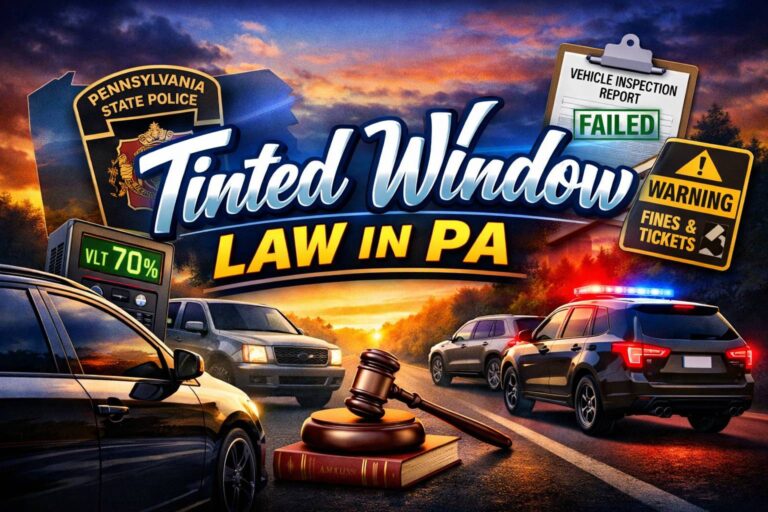
Tinted Window Law in PA
Understanding the Tinted Window Law in Pa is essential for any driver who wants to customize their vehicle without risking tickets, inspection failures, or repeated removal costs. Pennsylvania has some of the strictest window tint regulations in the country, and many drivers unknowingly violate the law by following tint standards from other states.
The Tinted Window Law in Pa does not focus only on how dark the tint looks. It also considers whether someone can clearly see inside the vehicle, the type of vehicle being driven, and whether the windows meet specific light-transmittance requirements used during inspections and traffic stops.
Because Pennsylvania is an annual inspection state, even a tint that seems minor or “barely noticeable” can cause ongoing problems if it does not comply with the Tinted Window Law in Pa. Knowing the exact rules before applying tint can save drivers time, money, and unnecessary legal trouble.
How Pennsylvania Regulates Window Tint
Pennsylvania regulates window tint using two core principles that work together.
First, the law looks at visibility into the vehicle. If window tint prevents a person from seeing into the vehicle through required windows, it can be considered illegal regardless of how it was marketed or installed.
Second, Pennsylvania uses minimum visible light transmittance standards, commonly referred to as VLT. These standards specify how much light must pass through different vehicle windows depending on the vehicle type and model year.
Understanding both standards is essential, because a tint job that seems light enough can still be illegal if it violates either rule.
Understanding VLT (Visible Light Transmittance)
Visible Light Transmittance is the percentage of visible light that passes through your window glass.
A higher percentage means lighter tint, while a lower percentage means darker tint.
For example:
-
70% VLT allows most light through and appears very light
-
50% VLT is noticeably tinted
-
35% VLT and below is considered dark
Pennsylvania is one of the strictest states when it comes to allowable VLT, especially for passenger vehicles.
Pennsylvania Window Tint Limits Explained
Pennsylvania law sets different tint rules based on vehicle classification and model year.
Passenger Cars (Sedans, Coupes, Hatchbacks)
For most passenger cars, Pennsylvania requires very light tint on nearly all windows.
Passenger Cars Manufactured Before 1998
-
Windshield: 70% VLT
-
Front side windows: 70% VLT
-
Rear side windows: 70% VLT
-
Rear window: must meet specific glazing certification standards
Passenger Cars Manufactured in 1998 or Later
-
Windshield: 70% VLT
-
Front side windows: 70% VLT
-
Rear side windows: 70% VLT
-
Rear window: 70% VLT
In practical terms, this means dark privacy tint is not legal on passenger cars in Pennsylvania, even on rear windows.
SUVs, Vans, and Trucks (Multipurpose Passenger Vehicles)
This is where Pennsylvania law differs significantly from passenger cars.
For SUVs, vans, and many trucks:
-
Windshield: 70% VLT
-
Front side windows: 70% VLT
-
Rear side windows: no specific VLT limit
-
Rear window: no specific VLT limit
This allows darker tint on rear windows for SUVs and trucks, which is why these vehicles often appear much darker than sedans on the road.
Commercial Vehicles and Buses
Commercial vehicles follow similar rules:
-
Windshield and front side windows must allow sufficient light
-
Rear windows may have fewer restrictions depending on vehicle use
Windshield Tint Rules in Pennsylvania
Windshield tint is the most strictly enforced area of Pennsylvania’s tint law.
The main portion of the windshield must allow at least 70% visible light. Any material that interferes with the driver’s ability to see clearly through the windshield can cause inspection failure or a traffic stop.
A narrow tinted strip at the top of the windshield is generally acceptable if it stays within the manufacturer-designated area and does not obstruct vision.
Dark or reflective windshield tint below this area is a common reason for citations.
Visibility Rule: Why Some Tint Leads to Traffic Stops
Pennsylvania law does not rely solely on tint percentages. It also considers whether the tint prevents a person from seeing inside the vehicle.
This matters because:
-
Officers do not need roadside VLT meters to initiate a stop
-
If the interior of the vehicle cannot be seen clearly, the tint may be presumed illegal
-
Tint stops are commonly upheld when visibility is significantly reduced
Even tint that technically measures close to legal limits can still draw attention if it appears opaque from outside.
Pennsylvania Vehicle Inspections and Window Tint
Pennsylvania is an annual inspection state, which makes window tint a recurring issue for many drivers.
Tint is often flagged during inspection if:
-
It appears darker than permitted
-
It prevents viewing the interior
-
It does not meet glazing requirements
A vehicle may pass inspection one year and fail the next due to aging film, bubbling, discoloration, or changes in enforcement consistency.
Passenger Cars vs SUVs: Why Tint Laws Feel Inconsistent
Many drivers assume tint laws are applied equally across all vehicles, but that’s not the case in Pennsylvania.
Passenger cars are subject to stricter tint limits on rear windows, while SUVs and trucks are allowed much darker rear tint.
This distinction explains why:
-
Two vehicles can have drastically different tint levels
-
A sedan may fail inspection while an SUV passes with similar tint
-
Tint shops often ask about vehicle classification before installation
Mirror Requirements for Tinted Vehicles
When rear visibility is reduced by tint, Pennsylvania law requires adequate mirror coverage.
In most cases, this means:
-
Functional driver-side and passenger-side mirrors
-
Mirrors must provide a clear rearward view if the rear window is tinted
Failing to meet mirror requirements can result in inspection failure even if the tint itself is otherwise allowed.
Medical Window Tint Exemptions in Pennsylvania
Pennsylvania does allow medical exemptions for window tint, but these exemptions are often misunderstood.
Key points:
-
Medical exemptions typically apply to colorless or lightly tinted UV-filtering material
-
Dark privacy tint is generally not approved
-
A licensed physician or optometrist must certify the condition
-
An official exemption certificate must be carried in the vehicle
If the vehicle is sold or transferred, the exemption becomes invalid and non-compliant tint must be removed.
Out-of-State Vehicles and Pennsylvania Tint Law
Drivers moving to Pennsylvania often assume tint that was legal elsewhere will remain legal.
In reality:
-
Vehicles operated and inspected in Pennsylvania must meet Pennsylvania standards
-
Tint that is legal in neighboring states often fails PA inspection
-
Registration and inspection typically trigger compliance requirements
This is one of the most common causes of unexpected inspection failures for new residents.
Penalties for Illegal Window Tint in PA
Consequences vary depending on the situation but may include:
-
Traffic stop and warning
-
Equipment violation citation
-
Requirement to remove or replace tint
-
Inspection failure until corrected
Tint violations can also lead to additional scrutiny during traffic stops.
How to Choose Legal Tint in Pennsylvania
If your goal is heat reduction and UV protection without legal trouble, a conservative approach works best.
Step 1: Confirm your vehicle type
Passenger cars and SUVs follow different rules.
Step 2: Be cautious with front windows
Front side windows are the most heavily enforced and should remain close to factory appearance.
Step 3: Avoid dark windshield tint
Even light tint outside permitted areas can cause problems.
Step 4: Use quality film
Poor-quality tint can darken over time and fail inspection later.
Step 5: Keep documentation
If you have a medical exemption, carry it at all times.
Common Myths About Pennsylvania Tint Law
Myth: All tint is illegal in Pennsylvania
Reality: Tint is allowed, but limits are strict and visibility is key.
Myth: Medical exemptions allow dark tint
Reality: Exemptions usually apply only to colorless or very light UV-filtering material.
Myth: Passing inspection once means permanent compliance
Reality: Tint condition and enforcement vary year to year.
Quick Legal Summary
Passenger Cars (1998 and newer)
-
Windshield: 70%
-
Front side windows: 70%
-
Rear side windows: 70%
-
Rear window: 70%
SUVs and Trucks
-
Windshield: 70%
-
Front side windows: 70%
-
Rear side windows: unrestricted
-
Rear window: unrestricted
Final Thoughts
Pennsylvania has one of the strictest window tint laws in the country, especially for passenger cars. Most legal issues arise when drivers apply tint based on standards from other states or rely on appearance instead of actual legal requirements.
If you want to avoid tickets, inspection failures, and repeated tint removal costs, stay conservative with front windows, respect vehicle classification rules, and prioritize visibility. When in doubt, lighter tint is always the safer choice in Pennsylvania.
Frequently Asked Questions (FAQs)
1. What does the Tinted Window Law in Pa allow for vehicle window tint?
The Tinted Window Law in Pa generally requires very light tint on windshields and front side windows, usually around 70% visible light transmission. Passenger cars also face strict limits on rear windows, while SUVs and trucks may have fewer restrictions on rear glass depending on vehicle type.
2. Can I get pulled over in Pennsylvania just for having tinted windows?
Yes, a police officer can stop a vehicle if the window tint appears dark enough to prevent clear visibility into the car. Tint violations are often treated as equipment issues and can lead to warnings, citations, or inspection problems.
3. Is windshield tint legal in Pennsylvania?
Windshield tint is legal only if it does not reduce visibility beyond allowed limits. Dark or full-coverage windshield tint is not permitted, but a narrow tinted strip at the top of the windshield is commonly allowed if it does not obstruct the driver’s view.
4. Do SUVs and trucks follow the same tint rules as passenger cars?
No, Pennsylvania applies different rules based on vehicle classification. SUVs, vans, and trucks are often allowed darker tint on rear side windows and rear windshields, while passenger cars must follow stricter limits on all windows.
5. Does Pennsylvania offer a medical exemption for window tint?
Yes, Pennsylvania allows medical exemptions in limited cases. These exemptions usually apply to colorless or very light UV-filtering window film and require proper medical documentation that must be carried in the vehicle.