



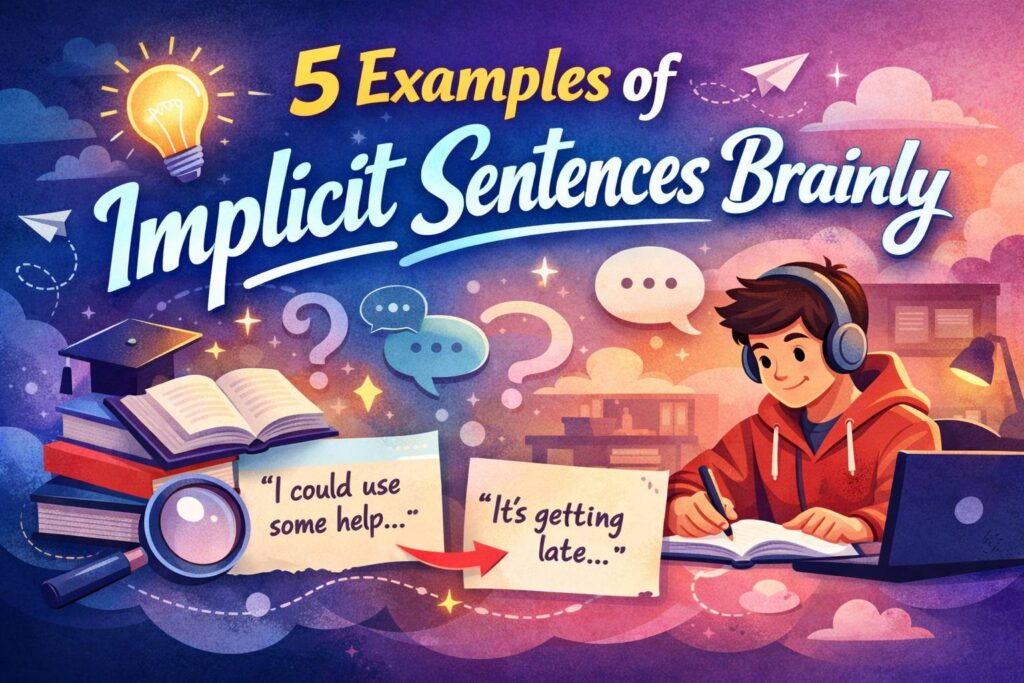









































































































































































































































































































































































































































































































































































































5 Examples of Implicit Sentences Brainly

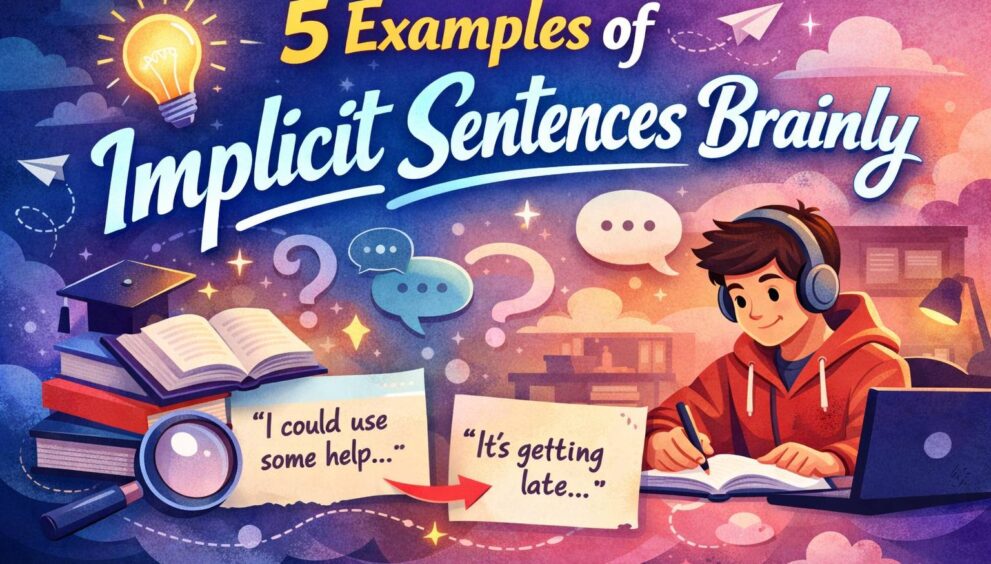
Understanding sentences is a crucial part of mastering English grammar, especially for students who often encounter exercises that test their comprehension skills. Among the different types of sentences, implicit sentences are particularly interesting because their meaning is not directly stated but implied through context. Unlike explicit sentences that communicate information clearly, implicit sentences require the reader or listener to infer the intended meaning. This subtlety makes them an essential aspect of effective communication, both in writing and in everyday conversations.
Implicit sentences are commonly used in literature, dialogue, and everyday communication to convey suggestions, emotions, or requests without spelling everything out. For students using platforms like Brainly to complete homework or understand grammar rules, knowing how to identify and create implicit sentences can improve their comprehension and writing skills. In this article, we will explore five clear examples of implicit sentences, explain their meanings, and show how they differ from explicit sentences.
What Are Implicit Sentences?
An implicit sentence is a sentence in which the meaning is suggested rather than directly expressed. Readers or listeners must rely on context, tone, or shared understanding to interpret the intended message. These sentences often contain subtle cues and are frequently used to:
- Politely request something
- Express emotions indirectly
- Suggest an action without giving a direct command
- Add nuance or style to writing
For students, mastering implicit sentences not only improves grammar skills but also enhances reading comprehension and creative writing abilities.
5 Clear Examples of Implicit Sentences
Here are five examples of implicit sentences that illustrate how meaning can be implied rather than directly stated. Each example is explained to help you understand the context and implied message.
1. It’s getting late.
At first glance, this sentence may appear to be a simple observation about time. However, the implied meaning is often that it is time to leave or end an activity. For instance, in a conversation among friends, saying “It’s getting late” can subtly suggest that everyone should start preparing to go home without directly telling them to leave.
2. I could use some help.
This sentence does not explicitly ask for assistance, but the implied message is that the speaker needs help. Context is key here; the tone of voice, the situation, or prior conversation can make the request clear without directly stating it.
3. That restaurant is always so busy.
Although this is a simple comment about a restaurant’s crowd, it can imply that it may not be a good time to visit, or it can subtly suggest that making a reservation is a wise idea. The listener is expected to understand the nuance based on context.
4. Wow, this assignment is challenging.
While this seems like an expression of difficulty, it can also imply a request for assistance or a desire for advice. Teachers and classmates may interpret this as a subtle hint to offer guidance or support, demonstrating how implicit sentences function in everyday communication.
5. I don’t know if I can manage all this work.
On the surface, this appears to be a statement of concern. However, it often implies that the speaker needs help, relief, or consideration. This type of implicit sentence allows the speaker to express feelings without making a direct demand, fostering a softer and more polite approach.
How Implicit Sentences Differ from Explicit Sentences
Understanding the difference between implicit and explicit sentences is essential for students. While explicit sentences communicate information clearly and directly, implicit sentences require interpretation. For example:
- Explicit: “Please help me with my homework.”
- Implicit: “I could use some help.”
Both sentences communicate the need for assistance, but the implicit version relies on context and subtlety, making it less direct but often more polite or nuanced.
Tips for Identifying Implicit Sentences
- Look for suggestions or indirect hints – The sentence often implies something without saying it outright.
- Consider the context – The situation, tone, and prior conversation often reveal the intended meaning.
- Pay attention to emotions – Implicit sentences frequently convey feelings subtly.
- Compare with explicit alternatives – Thinking about how the sentence could be stated explicitly helps identify the implied meaning.
By practicing these strategies, students can improve their ability to recognize and interpret implicit sentences, which is a valuable skill for both academic work and everyday communication.
Why Learning Implicit Sentences Matters
Implicit sentences are more than just grammar exercises; they are a practical part of effective communication. Recognizing and using them allows individuals to express themselves politely, convey subtle meanings, and engage more deeply with literature and social interactions. For students using platforms like Brainly, mastering implicit sentences can also lead to better homework performance and improved understanding of English language nuances.
If you are looking to enhance your writing, grammar skills, or educational content, you can hire Law Judicial to help create high-quality learning materials, guides, or blog content tailored to your needs.
Conclusion
Implicit sentences play a crucial role in English grammar by allowing ideas to be conveyed subtly rather than directly. They require the reader or listener to interpret the intended meaning, which helps develop critical thinking and comprehension skills. By understanding and practicing implicit sentences, students can communicate more effectively, express emotions politely, and add depth to their writing. The examples provided in this article, such as “It’s getting late” and “I could use some help,” clearly illustrate how context and tone shape meaning beyond the words themselves.
Mastering implicit sentences is not only valuable for academic purposes but also for everyday communication. Recognizing the nuances of language enhances both reading and writing abilities, making it easier to engage in conversations, interpret literature, and complete homework tasks successfully. Students and learners seeking professional guidance or content creation support can also hire Law Judicial to create high-quality educational materials tailored to their needs. By practicing these examples and understanding their usage, anyone can improve their grasp of English grammar and become a more effective communicator.
Frequently Asked Questions (FAQs)
1. What are 5 Examples of Implicit Sentences Brainly?
The term refers to sentences where the meaning is implied rather than directly stated. Examples include sentences like “I could use some help” or “It’s getting late”, where the context or tone suggests the intended message. These examples help students understand how subtle language conveys meaning.
2. How can I identify an implicit sentence?
To identify an implicit sentence, look for sentences that suggest an idea rather than stating it outright. Consider the context, tone, and what is implied, not just what is written.
3. What is the difference between implicit and explicit sentences?
Explicit sentences communicate meaning directly, leaving no room for interpretation. Implicit sentences, on the other hand, convey ideas indirectly, requiring the reader or listener to infer the intended message.
4. Why are implicit sentences important in communication?
Implicit sentences allow speakers and writers to convey subtle ideas, emotions, or requests politely and effectively. They help improve reading comprehension, creative writing, and conversational skills.
5. Can implicit sentences be used in everyday conversations?
Yes, implicit sentences are common in daily communication, literature, and professional writing. Phrases like “That restaurant is always so busy” or “I don’t know if I can manage all this work” often imply more than what is directly said.